
Speed vs Quality When AI Writes the Code: Keeping Projects Out of Neuroslop
AI makes drafts cheap. Without ownership, review, and the same quality gates as any other PR, product codebases fill with neuroslop - plausible, unmaintainable change.
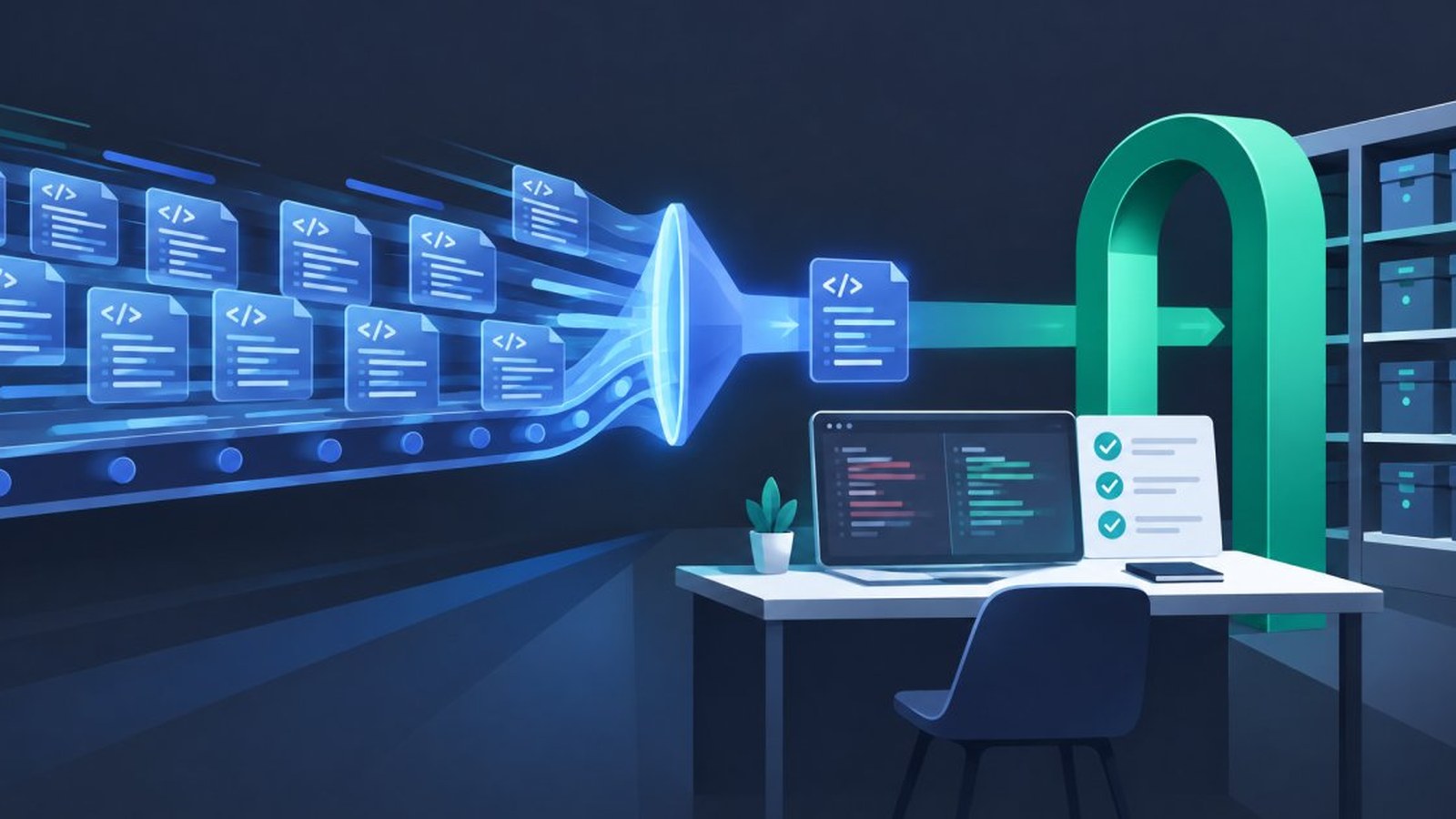
AI coding tools made typing cheap. They did not make shipping free.
That gap is where many teams get hurt. Jira velocity rises. Pull requests multiply. Demos look finished. Six weeks later the same team cannot change a module without fear, because the codebase is full of neuroslop: fluent, locally convincing output that does not hold as a system.
This article is for engineering leaders who already use AI in the loop (or are about to) and need a clear stance on speed vs quality. It complements our SDLC quality controls and AI adoption checklist. The point is not "ban the tools". The point is to raise the bar for acceptance while the tools raise the volume of draft code.
What "neuroslop" means in a product repo
Neuroslop is not "any AI-assisted line". It is change that looks like progress and fails the tests of ownership:
| Signal | What you see | Why it hurts later |
|---|---|---|
| Plausible but shallow | Naming, structure, and comments look "senior" | Behaviour edges, error paths, and domain rules are wrong or missing |
| Context-blind glue | Helpers and configs that almost match the project | Drift from conventions, duplicate abstractions, silent breakages |
| Review theatre | Large diffs rubber-stamped under time pressure | Defects move to production; reviewers burn out |
| Metric theatre | More tickets closed, more commits | Lead time and change-fail rate do not improve |
If AI-empowered delivery still has a human who can explain and defend the change, you are not in slop territory. If nobody can say why a file exists without re-asking the model, you are.
Speed vs quality: two different clocks
Teams often argue as if there were one dial labelled "faster or better". With AI there are at least two clocks:
- Draft speed - time from ticket to a first compilable diff. AI usually helps here.
- Ship speed - time to a change you trust in production. This still depends on design fit, tests, review, and release discipline.
Optimising only the first clock produces a familiar failure mode: the team writes faster and delivers slower, because every merge deposits debt that the next change must pay.
Quality is not the opposite of speed. Unowned speed is. Throughput without stability is not an engineering win - it is a reporting win.
New challenges AI adds to software engineering
1. Review load scales faster than headcount
When juniors and mid-levels can generate 400-line drafts in an afternoon, senior review becomes the bottleneck. If you do not redesign review (smaller PRs, clearer DoD, stronger automated gates), seniors either rubber-stamp or become a permanent queue.
2. False confidence from fluent text
Models write confident prose in comments and commit messages. That fluency is not evidence. Treat AI explanations as claims, not as audit trails.
3. Context rot across sessions
Each chat starts almost fresh. Without repo conventions, architecture decision records, and ticket-level acceptance criteria, the model invents a local style. Over weeks you get many "almost right" dialects in one product.
4. Blurred authorship and accountability
"The AI wrote it" is not an owner. For a dedicated development team embedded in your process, the accountable engineer is still the one who opens the PR and accepts the risk. Tools do not sit on-call.
5. Security and licence surprises
Generated snippets can drag in unsafe patterns or unclear provenance. Security review and dependency policy belong in the same pipeline as style checks - not in a yearly audit.
Controls that still work (and should get stricter)
You do not need a new religion. You need the same gates, applied without exemption for AI-authored lines. We describe the full SDLC version in code quality review and control. In an AI-heavy team, emphasise:
Ownership on the PR. Author states what was human-designed vs tool-drafted, what was tested, and what is out of scope. No anonymous mega-diffs.
Definition of Done that mentions AI. Example additions: "author can explain every new public API", "no generated block left without tests where behaviour is non-trivial", "secrets and licence headers checked".
Smaller changes. AI makes large diffs easy. Policy should make large diffs expensive in review time. Prefer vertical slices that a human can hold in working memory.
Automated gates that do not negotiate. Unit/integration tests, static analysis, formatting, dependency and secret scans - the same blockers for every PR. If someone wants to skip a gate "because the model is sure", that is a process smell.
Human acceptance stays human. AI can propose tests; humans decide whether the tests encode the real risk. AI can propose a refactor; humans decide whether the architecture still matches the product.
Visible standards. Coding guidelines, ADRs, and example PRs beat another tool licence. Models follow the repo they can see; empty context produces generic code.
A practical balance for product teams
A workable stance for most product organisations:
- Allow AI where draft speed matters - boilerplate, exploratory spikes, first-cut tests, summarising unfamiliar code - inside an agreed tool policy.
- Forbid silent merge of AI-heavy diffs - same peer review as any other change; seniors sample AI-heavy PRs deliberately.
- Measure ship outcomes, not keystrokes - lead time, change fail rate, escaped defects, time to understand a module. If draft volume rises and those stay flat or worsen, you are buying neuroslop.
- Budget refactor and deletion - AI is good at adding. Teams must stay good at removing.
- Train the review skill - spotting shallow correctness is now a core senior skill, not a nice-to-have.
This is the same philosophy as our development approach: transparency, peer review, and quality gates across the lifecycle - with AI as an accelerator inside that system, not a bypass around it.
Conclusion
AI did not cancel the speed vs quality tension. It moved it. Drafting got cheaper; acceptance got more important.
Neuroslop appears when organisations celebrate volume and weaken ownership. The antidote is not nostalgia for pre-AI workflows. It is stricter clarity on who owns the change, what "done" means, and which gates never get a free pass.
If you want a team that uses modern AI tooling and keeps a codebase you can still change in twelve months, talk to us about a dedicated development team embedded in your rituals - or get in touch for a short working conversation on your current gates and review load.