
Smartym's Pro Approach to Software Development
Since 2012 we have delivered 100+ projects for product companies, scaleups and enterprises in the UK, Europe and the US. This page shows how we run them: four delivery stages, the engagement models we offer, the team we put together and how you stay in control of the work.
Our Workflow
Four stages, from the first conversation to support after release. AI tools speed up drafting, coding and testing inside each stage; people still own the architecture, every merge and every release.
What we do:
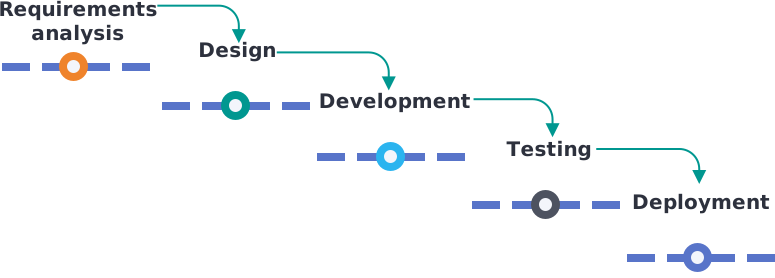
Goals and requirements
Workshops with your team on goals, users, constraints and the first release. AI helps draft requirements and spot gaps between documents; engineers validate every draft before it is estimated.
Standards before the first commit
We agree the stack, branching model, Definition of Done, and the security and compliance constraints: data residency, logging and secrets handling.
Agents, if the product has them
When a model will decide or act inside the product, we also define its mandate, the context it may read, the tools it may call and the evaluation set it must pass before release.
Estimate and contract
A phased estimate, roadmap and budget for the agreed scope. The terms go into a statement of work for the engagement model you choose.
What you get:
- Requirements package and detailed estimate
- Project roadmap and budget plan
- Wireframes
- UI design
- Proof of concept, when a risk needs one
What we do:
Iterations from a shared backlog
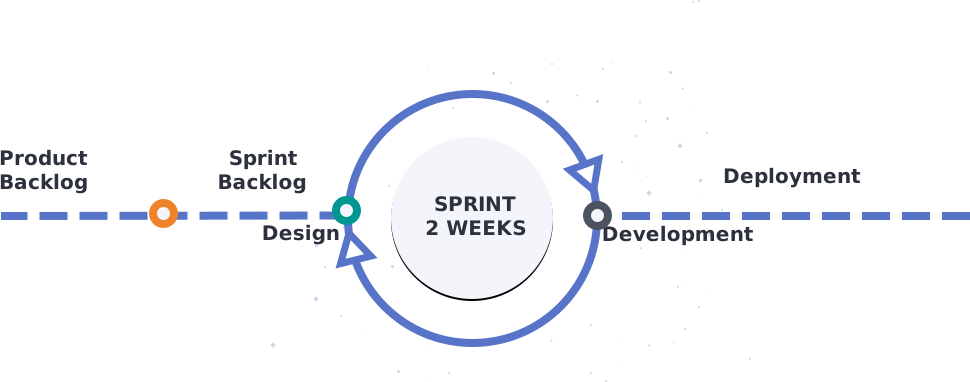
Work runs in sprints from a backlog you can see and reprioritise, from business analysis and design to QA and retrospectives.
AI-assisted engineering, human review
Engineers use coding assistants for drafts, tests and documentation. Generated code goes through the same pull request, CI and security checks as any other change; merge authority stays with people.
Peer review and quality gates
Every meaningful change is reviewed before it reaches the main branch. CI runs the build, unit and integration tests and static analysis with SonarQube, and a failing check blocks the merge.
Keeping in touch
Demos after each sprint, written reports and direct access to the engineers, so you see progress in working software rather than in slides.
What you get:
- Shared backlog
- Project documentation
- Sprint progress report
- Managed change requests
- Demo every sprint
- First release or MVP
What we do:
Release readiness
Sign-off against the Definition of Done: migration scripts tested, rollback path agreed, release notes prepared.
Verification on staging
Automated UI tests, exploratory testing and checks on a staging environment that mirrors production. Error monitoring and analytics are connected so production signals reach the next sprint.
Release through the pipeline
Continuous integration and delivery take the build to staging and production. Agent features ship behind a feature flag or to a limited group first, with limits on steps, spend and tools.
What you get:
- Production release
- Monitoring and alerts
- Release notes and runbooks
- Handover documentation
What we do:
Production support
Corrective maintenance under an agreed SLA: incidents, defects and small fixes, with the same review and CI discipline as during development.
Preventive maintenance and security
Dependency and security updates, refactoring and monitoring, so technical debt is planned in the backlog rather than discovered in an incident.
Evolution and modernisation
New features, performance work and step-by-step modernisation of older parts of the system, without a big-bang rewrite.
Health assessment and re-evaluation
Periodic reviews of architecture, security and delivery risks. For agents, the evaluation set is re-run whenever the prompt, the model, the tools or the main content sources change.
What you get:
- Support SLA
- Post-release support
- Patch and update plan
- Up-to-date system
How We Use AI
The same tools behave very differently depending on what they are building. An MVP has to prove an idea quickly; a production system has to keep working for the people who already depend on it. So we set the speed and the checks by what breaks if the code is wrong.
MVP and prototypes
The goal: learn fast
AI carries more of the drafting, so a hypothesis reaches real users sooner. Scope stays lean, and the first release is built to grow rather than to be thrown away.
- AI drafts modules, tests and documentation under senior review
- Scope is cut to what proves the business case
- QA concentrates on the critical paths
- People still answer for boundaries, identity and money paths
Production systems
The goal: change safely
AI is most useful here for understanding the system and preparing the change. Speed never replaces the checks that protect live users and data.
- AI helps document existing code, map technical debt and find test gaps
- Generated code goes through the same pull request, CI and security checks
- A failing check blocks the merge
- People approve every merge, release and cutover
When the product itself contains an AI agent: ADLC
Assistants speed up the software development lifecycle (SDLC) without changing its shape. An agent makes decisions at runtime, so it also needs an agent development lifecycle (ADLC): a mandate, curated context, scoped tools, an evaluation set with a threshold, a controlled release and re-evaluation after model or content changes.
SDLC vs ADLC, explainedEngagement Models
Services Built on This Process
The same stages and engagement models apply across our services. These pages show how they work for a specific kind of project.
Team Structure
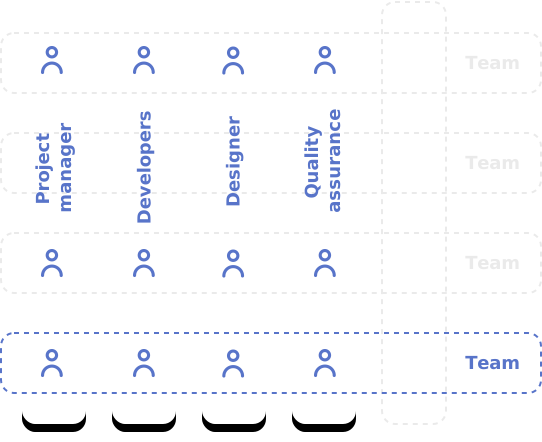
We form each team around the product's scope, stack, timeline and engagement model. The roles stay the same; what changes is who holds them, you or us. A typical cross-functional team includes:
- Software developers, usually two per platform or service area
- Tech lead who sets the technical direction and review bar
- QA engineer who owns test strategy and the release gate
- Project manager or business analyst
- UI/UX designer, when the product surface needs one
- DevOps engineer, often part-time at the start
Larger programmes scale to several squads, each with the same role clarity. Our project managers hold PMP and CSM certifications.
How You Stay in Control of Delivery
Daily communication
A shared channel with the team for tasks, questions and decisions, in your tools or ours.
Access to the repository
You can see branches, pull requests, review comments and CI history, so you can check code quality and progress yourself.
Demo presentations
A demo after every sprint, where we review the working software, open risks and the next priorities.
Reports
After each sprint you get a report with hours spent, completed tasks and the share of planned scope that is done.
Calls
Regular calls on your schedule, each followed by a written summary of decisions and next steps.
Direct access to engineers
You can talk to any engineer on the team, not only the project manager, and judge their expertise yourself.
Technologies We Build With
Programming Languages
- Java
- Python
- TypeScript
- Swift
- Kotlin
Libraries & Frameworks
- Spring Boot
- Node.js
- React
- Next.js
- Vue.js
- Angular
- React Native
- Flutter
Data
- PostgreSQL
- Oracle
- MongoDB
- Redis
- Kafka
- Elasticsearch
AI
- OpenAI
- Anthropic Claude
- LangChain
- Claude Code
- Cursor
- GitHub Copilot
Testing
- Playwright
- Selenium
- Postman
- JUnit
- JMeter
Cloud & Infrastructure
- AWS
- Azure
- Google Cloud
- Docker
- Kubernetes
- Terraform
- OpenStack
- Proxmox
Security & Monitoring
- SonarQube
- OWASP
- HashiCorp Vault
- Prometheus
- Grafana
- ELK Stack
- Sentry
Tools
- Figma
- JetBrains
- Atlassian
- Obsidian
- GitHub
- GitLab
- Jenkins
What you get when you work with Smartym Pro
A European nearshore team in Poland, working in your time zone and your process, as close to your product as an in-house team.
Reviewed, tested code that the next team can maintain
Senior engineers who stay on your product instead of rotating
Phased estimates based on discovery, not on guesses
ISO 27001 certified processes and secure coding practices
Technically skilled delivery management
AI-assisted engineering with human review on every change
Judge by what our clients tell about us
Crypto-trading platform, messenger with crypto payments and E2E encryption
What is most important for us, Smartym Pro has already delivered a mobile and desktop app with clear, flexible and scalable architecture, and are in the final stages of developing perceptive exchange platform. Throughout the whole development process, they have been maintaining high-level project management.
CTO, LetKnow HQ Ltd

Web application development services for Real Estate Company
Smartym Pro was able to develop top quality algorithms and analysis modules that helped the client achieve its goals. They have a collaborative approach. The team is really communicative, and this is a big thing when it comes to complex development process.
CEO, Real Estate Company
Custom Development for Emerging Blockchain Platform
Smartym Pro’s diverse resources have helped progress the project, from the web/mobile apps and Node.js packages to the smart contracts. The team is invested in their work, providing critical insights into emerging technologies and best practices. Regular communication ensures a strong workflow.
CTO, Blockchain Platform
Sharing our experience
Frequently Asked Questions
Ready to plan your project?
Tell us what you want to build or change. We will suggest the first steps, the engagement model that fits and the team you would need.